
Family support planned for aging population
China will support the role of family in providing care to the elderly as the country responds to the rapid aging of its population, a top health and population official of China said during the 2014 World Family Summit.
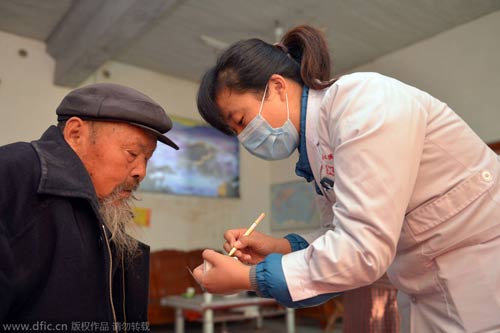
"China will actively respond to population aging and include it as part of China's national plan for development," Li Bin, minister of the National Health and Family Planning Commission, said during the summit, which concluded on Wednesday in Zhuhai, Guangdong province. "The government will help families increase their capacity for elder care and provide more training to them."
To cope with its rapidly aging population, China will establish social security and health support networks for the elderly and provide a better environment to serve the elderly, she said.
The government will create policies targeted at the development of families and invest more human resources to help families guard against potential risks, she said in a speech during the summit.
The number of people aged 60 or above in China reached 202 million last year, accounting for nearly 15 percent of the country's population, according to a report released by the commission in November.
More than 20 percent of families in China had at least one member aged 65 or older in 2010, and almost half of all people aged 65 or above live with their children, according to the report. Most elderly Chinese are still cared for by their families, the report said.
A severe shortage of quality elderly-care institutions and traditional beliefs are the major reasons family members mostly care for their own elderly, experts said.
"There are tens of thousands of old people in China that have lost the ability to work, and it is very difficult to build enough institutions to care for all of them," said He Zhaohua, vice-head for family affairs with the National Health and Family Planning Commission.
"We are researching possible policies to provide better care for the increasing number of our aging population, and family will play a better role," he said.
Ru Xiaomei, an expert in family care at the commission, said there is a severe shortage of qualified professional caregivers for the elderly in China, and more training should be provided to produce more caregivers to help families support their elderly.


- Plan to boost eye care services by 2030
- China sees wider healthcare access as system continues to grow
- China moves to further improve family doctor services
- China targets better health for all by 2030
- China targets average life expectancy of 80 by 2030 in new five-year health plan
- The number of assisted reproductive institutions reaches 645 in China