
Government calls attention to children left behind in rural areas
At the recent annual sessions of China’s congress in Beijing, a spotlight was shone on the growing number of children who stay behind in rural areas when their parents have to go to big cities to find work, especially when Premier Li Keqiang proposed that they be given better care, along with the elderly, and that there be a social protection system for juveniles.
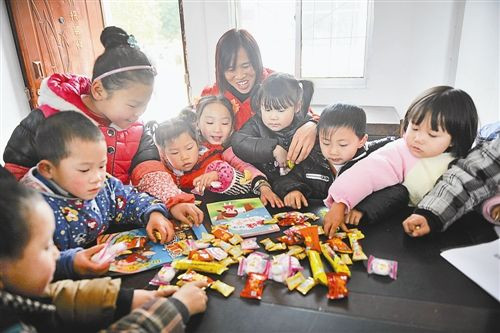
Since China's reforms and opening up started three decades ago, many young to middle-aged men in rural areas have left home to seek work elsewhere as children, women and the elderly remain at home. This massive migration has changed the rural family's role in bringing up a child and caring for the elderly and poses serious challenges for marriage and life.
Ye Jingzhong, a professor at China Agricultural University's humanities and development studies dept, has painted a graphic picture of the life of those left behind in his writing, noting that men have increasingly become the decision-makers as they work outside, while women have seen their energy drained by taking care of the agricultural work and the family. And, while parents working away from home help raise the standard of living, children are separated from their parents and can suffer from an emotional deficiency that is detrimental to their personal and moral development. Meanwhile, the elderly face more uncertainties and challenges in their daily lives and spiritual needs as the children go away.


- Plan to boost eye care services by 2030
- China sees wider healthcare access as system continues to grow
- China moves to further improve family doctor services
- China targets better health for all by 2030
- China targets average life expectancy of 80 by 2030 in new five-year health plan
- The number of assisted reproductive institutions reaches 645 in China