
Urumqi conducts nucleic acid tests on residential communities before normal work resumes
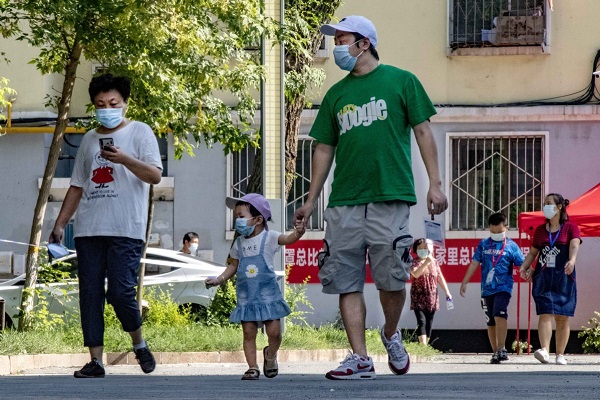
Residents walk in a community in Urumqi, Xinjiang Uygur autonomous region, on Monday. The city relaxed its epidemic control policy to allow residents in epidemic-free neighborhoods to walk within their communities. CAI ZENGLE/XINJIANG DAILY
URUMQI -- Urumqi, capital of Northwest China's Xinjiang Uygur autonomous region, on Aug 26 started a new round of nucleic acid tests for residents in key residential communities to ensure their health and safety, local authorities said.
Urumqi will then further adjust their epidemic prevention and control measures and gradually restore the normal work and life order, deputy director of the regional publicity department Wang Wulong told a press conference Wednesday.
Through hard work, the epidemic prevention and control situation in Urumqi has expanded to a positive trend, Wang added.
On July 15, Urumqi confirmed one new COVID-19 case. The city then applied lockdown measures in its residential communities and villages, and carried out free nucleic acid tests for all residents.
By Tuesday midnight, Xinjiang had 124 confirmed COVID-19 cases and 44 asymptomatic cases, with 3,024 people still under medical observation. No newly confirmed COVID-19 cases have been reported in Xinjiang since Aug 16.


- Plan to boost eye care services by 2030
- China sees wider healthcare access as system continues to grow
- China moves to further improve family doctor services
- China targets better health for all by 2030
- China targets average life expectancy of 80 by 2030 in new five-year health plan
- The number of assisted reproductive institutions reaches 645 in China