
TCM readily winning acceptance overseas
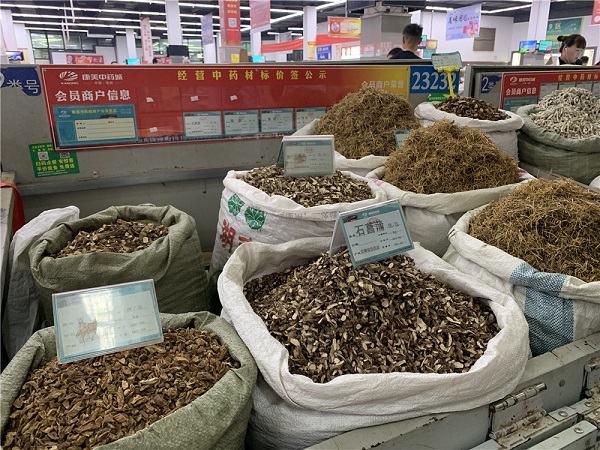
TCM supplies are sold at the Chinese Medicinal Herbs Market in Bozhou. [Photo by Fan Yuanyuan/chinadaily.com.cn]
Center for exchanges
The university in Yunnan said the TCM center will become a platform for TCM exchanges and promotion in South and Southeast Asia that integrates TCM education, healthcare, scientific research and cultural exchanges.
Song, from the Shanghai university, said that as worldwide demand for TCM increases, it is not realistic to rely on domestic production of herbs, due to China's limited land and labor resources, and international cooperation could boost the production of TCM ingredients.
"In China, growing TCM herbs has helped a lot of farmers escape poverty, and planting herbs can also contribute to poverty alleviation in other countries while improving the supply of herbs," he said.
Many herbs used for TCM even originated overseas, including American ginseng and safflower from Iran and Afghanistan, and TCM herbs produced in their places of origin have better medical effects, he said.
"We hope to see traditional Chinese medicine grow into a business that includes cultivation and processing of herbs and drug research and development overseas, which will not only provide more health benefits to overseas residents, but also bring them economic benefits," Song said.


- Plan to boost eye care services by 2030
- China sees wider healthcare access as system continues to grow
- China moves to further improve family doctor services
- China targets better health for all by 2030
- China targets average life expectancy of 80 by 2030 in new five-year health plan
- The number of assisted reproductive institutions reaches 645 in China